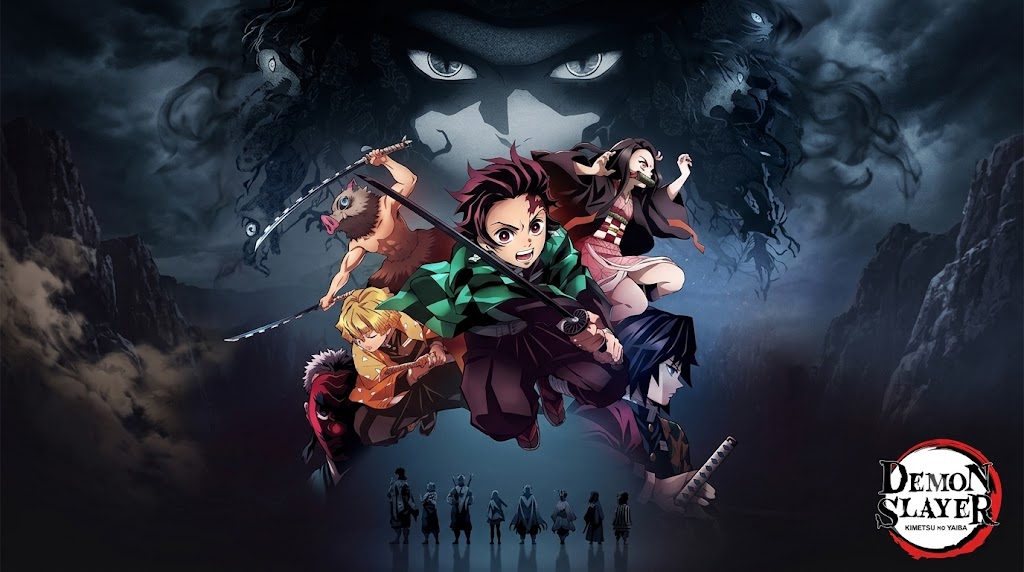
Demon Slayer, also known as Kimetsu no Yaiba, has become one of the most popular anime franchises of the modern era. Combining emotional storytelling, memorable characters, intense sword fights and stunning animation, the series has attracted a huge international audience.
At the centre of Demon Slayer is Tanjiro Kamado, a kind-hearted young boy whose life changes completely after a devastating tragedy. When his family is attacked by demons and his sister Nezuko is transformed into a demon, Tanjiro begins a dangerous journey to find a way to restore her humanity.
What begins as a personal mission gradually becomes a much larger battle involving the Demon Slayer Corps, powerful Hashira warriors and the terrifying demons led by Muzan Kibutsuji.
The series stands out because it balances action with emotional storytelling. Battles are important, but the characters’ relationships, memories, motivations and sacrifices are equally central to the story.
What Is Demon Slayer?
Demon Slayer: Kimetsu no Yaiba is a Japanese manga and anime series created by Koyoharu Gotouge.
The story takes place in a historical fantasy setting inspired by Japan’s Taisho era. Humans live alongside the threat of demons, supernatural creatures that prey on people and possess extraordinary abilities.
The Demon Slayer Corps is an organisation dedicated to fighting these demons.
Unlike ordinary soldiers, Demon Slayers use specialised swordsmanship techniques and breathing styles to battle enemies that possess incredible strength, speed and regenerative abilities.
The series combines traditional Japanese aesthetics with supernatural fantasy, creating a distinctive visual and narrative world.
The Story of Tanjiro Kamado
Tanjiro Kamado is the central protagonist of Demon Slayer.
Before becoming a Demon Slayer, Tanjiro lives with his family in the mountains and supports them by selling charcoal. His life is simple, but he is deeply connected to his family.
Everything changes when he returns home one day and discovers that his family has been attacked by a demon.
Nezuko, his younger sister, is the only surviving member of the family, but she has been transformed into a demon.
Despite becoming a demon, Nezuko retains unusual signs of humanity.
Tanjiro refuses to abandon her.
His determination to find a way to turn Nezuko back into a human becomes one of the main motivations behind the story.
Tanjiro’s Journey
Tanjiro eventually begins training to become a member of the Demon Slayer Corps.
His journey is not simply about becoming stronger.
He must learn how demons work, develop his swordsmanship and survive encounters with increasingly powerful enemies.
Along the way, he meets other Demon Slayers who become important companions.
Zenitsu Agatsuma and Inosuke Hashibira bring very different personalities to the group.
Zenitsu is often frightened and anxious, while Inosuke is aggressive, competitive and impulsive.
Their contrasting personalities create humour during otherwise serious moments, while their individual development gives the story additional emotional depth.
Nezuko Kamado
Nezuko is one of the most recognisable characters in Demon Slayer.
After being transformed into a demon, she develops supernatural abilities but continues to show affection toward her brother and other humans.
Her unusual condition becomes an important mystery within the story.
Nezuko’s existence also challenges the traditional understanding of demons. Most demons are portrayed as dangerous creatures that have abandoned their human identities, but Nezuko demonstrates that traces of humanity can potentially remain.
Her relationship with Tanjiro is one of the emotional foundations of the series.
Muzan Kibutsuji
Muzan Kibutsuji is the primary antagonist of Demon Slayer.
He is responsible for creating many demons and stands at the centre of the supernatural threat faced by Tanjiro and the Demon Slayer Corps.
Muzan is fundamentally different from Tanjiro.
While Tanjiro repeatedly demonstrates compassion, loyalty and a willingness to sacrifice himself for others, Muzan is driven largely by self-preservation and the desire to overcome his own weaknesses.
His immense power makes him one of the most dangerous figures in the series.
The conflict between Tanjiro and Muzan eventually becomes much larger than Tanjiro’s original mission to save Nezuko.
The Demon Slayer Corps
The Demon Slayer Corps is the organisation responsible for fighting demons.
Its members undergo difficult training and risk their lives to protect civilians.
The Corps includes fighters with different personalities, backgrounds and fighting styles.
At the highest level are the Hashira, elite Demon Slayers who represent some of the strongest warriors within the organisation.
The Hashira are central to many of the series’ most memorable battles.
The Hashira
The Hashira are the elite members of the Demon Slayer Corps.
Each Hashira generally specialises in a particular Breathing Style and possesses exceptional combat ability.
Among the most prominent Hashira are:
- Giyu Tomioka
- Shinobu Kocho
- Kyojuro Rengoku
- Tengen Uzui
- Mitsuri Kanroji
- Muichiro Tokito
- Gyomei Himejima
- Sanemi Shinazugawa
- Obanai Iguro
Each character has a different personality, history and approach to combat.
Their stories also demonstrate the enormous personal cost of fighting demons.
Breathing Styles in Demon Slayer
One of the most distinctive elements of Demon Slayer is its Breathing Style system.
Breathing techniques allow Demon Slayers to improve their physical abilities and perform specialised sword techniques.
Different characters use different styles.
Some of the most important include:
Water Breathing
Water Breathing is strongly associated with Tanjiro during the early stages of his development and with Giyu Tomioka.
Its techniques are characterised by flowing movements and adaptability.
Thunder Breathing
Thunder Breathing is associated with Zenitsu Agatsuma.
The style focuses heavily on speed and explosive movement.
Zenitsu’s development demonstrates that a character who initially appears fearful can possess remarkable combat potential.
Beast Breathing
Inosuke Hashibira uses Beast Breathing.
His fighting style reflects his wild personality, featuring unpredictable movements and aggressive attacks.
Flame Breathing
Flame Breathing is associated with Kyojuro Rengoku.
The style visually and thematically reflects the character’s powerful personality and determination.
Mist Breathing
Muichiro Tokito uses Mist Breathing.
Its movements create a style based around speed, confusion and unpredictability.
Love Breathing
Mitsuri Kanroji uses Love Breathing, a highly distinctive style that reflects her unusual physical abilities and flexible sword.
These different techniques help make Demon Slayer’s combat system visually diverse.
Why Demon Slayer Battles Are So Popular
The battles in Demon Slayer are one of the biggest reasons for the anime’s popularity.
The series combines sword fighting with supernatural abilities and highly stylised animation.
However, the appeal is not simply visual.
Many battles have emotional consequences.
Characters often fight while dealing with fear, grief, memories or personal trauma. As a result, victories can feel meaningful and losses can have a lasting impact.
The anime adaptation has also been praised for turning major battles into visually spectacular sequences.
Major Story Arcs
Demon Slayer is divided into several major story arcs.
Final Selection
Tanjiro’s journey begins with training and the Final Selection, where aspiring Demon Slayers must survive in a dangerous environment filled with demons.
This establishes the basic rules of the Demon Slayer Corps and introduces the risks faced by its members.
Mugen Train Arc
The Mugen Train storyline introduces Kyojuro Rengoku as a major character.
Tanjiro, Nezuko, Zenitsu and Inosuke join Rengoku aboard the train, where they encounter a powerful demon threat.
The arc became particularly famous for its emotional storytelling and intense final confrontation.
Entertainment District Arc
The Entertainment District Arc introduces Tengen Uzui and features some of the anime’s most visually impressive battles.
Tanjiro and his companions become involved in a dangerous mission that forces them to fight powerful demons.
The arc explores themes of sacrifice, family and survival.
Swordsmith Village Arc
The Swordsmith Village Arc expands the world of the Demon Slayer Corps and introduces additional Hashira characters.
Tanjiro must protect the village while facing powerful enemies.
The storyline also reveals more about the abilities and histories of several important characters.
Hashira Training Arc
The Hashira Training storyline focuses on preparation for the battles ahead.
Tanjiro and other Demon Slayers undergo intensive training as the conflict with Muzan approaches its decisive stage.
The arc gives viewers more opportunities to understand the Hashira and their relationships with other members of the Corps.
The Emotional Side of Demon Slayer
Demon Slayer is often remembered for its action, but its emotional storytelling is equally important.
Many demons are introduced as enemies but later receive stories explaining their human pasts.
These flashbacks can show how tragedy, desperation or manipulation contributed to their transformation.
This does not excuse their actions, but it adds complexity to the world.
Tanjiro’s compassion is particularly important because he can recognise the suffering behind a demon’s history while still understanding the need to protect innocent people.
The Importance of Family
Family is one of the strongest themes throughout Demon Slayer.
Tanjiro’s determination is directly connected to his family and his promise to protect Nezuko.
Other characters also have complicated family relationships.
Some demons are connected through twisted versions of loyalty and dependence, while Demon Slayers often carry memories of family members they have lost.
The series repeatedly asks how far someone will go to protect the people they love.
Demon Slayer’s Animation
The anime adaptation gained significant attention for its animation quality.
Its action sequences combine detailed character movement, dynamic camera work, special effects and carefully designed backgrounds.
Sword techniques are often represented with dramatic visual imagery, turning combat into something closer to moving artwork.
The animation also uses lighting and colour to create emotional atmosphere.
Quiet scenes can feel warm and intimate, while major battles can become visually overwhelming.
Why Demon Slayer Became a Global Phenomenon
Several factors contributed to the international popularity of Demon Slayer.
First, the story is relatively easy for new anime viewers to understand.
The central objective is clear: Tanjiro wants to protect his sister and find a way to restore her humanity.
Second, the characters have distinct personalities.
Third, the anime delivers highly polished action sequences.
Finally, the emotional storytelling makes the characters easy for audiences to connect with.
The combination of accessibility, spectacle and emotion helped Demon Slayer reach audiences far beyond traditional anime communities.
Demon Slayer Merchandise and Fan Culture
The popularity of Demon Slayer has also created a large merchandise and fan culture.
Fans can find figures, clothing, posters, keychains, accessories, collectibles and other products inspired by the series.
Characters such as Tanjiro, Nezuko, Zenitsu, Inosuke and the Hashira have become especially popular among collectors.
The franchise has also inspired fan art, cosplay, gaming content and online discussions.
What Makes Demon Slayer Different?
Demon Slayer is not the only anime about sword fighters and supernatural enemies.
What makes it distinctive is the way it combines several familiar ideas into a cohesive experience.
The historical Japanese setting, emotional family story, supernatural battles, breathing techniques and detailed animation work together to create its identity.
The series also manages to balance humour and tragedy.
Characters can be extremely funny in one scene and emotionally serious in the next.
That contrast helps keep the story engaging across different arcs.
Final Thoughts
Demon Slayer has established itself as one of the most influential and widely recognised anime franchises of its generation.
Its story begins with a simple and emotional goal: a brother trying to save his sister.
From there, the narrative expands into a much larger conflict involving the Demon Slayer Corps, the Hashira, powerful demons and Muzan Kibutsuji.
Tanjiro’s kindness, Nezuko’s unusual journey, the personalities of Zenitsu and Inosuke, the strength of the Hashira and the tragic histories of many demons all contribute to the series’ appeal.
Combined with memorable battles and highly polished animation, these elements have helped Demon Slayer become a major part of modern anime culture.
Whether someone is discovering the series for the first time or has followed Tanjiro’s journey from the beginning, Demon Slayer continues to stand out for its combination of action, emotion, character development and visual storytelling.
Frequently Asked Questions
What is Demon Slayer about?
Demon Slayer follows Tanjiro Kamado, a young boy who becomes a Demon Slayer after his family is attacked and his sister Nezuko is transformed into a demon. He searches for a way to restore her humanity while fighting dangerous demons.
Who is the main character in Demon Slayer?
Tanjiro Kamado is the main protagonist. His sister Nezuko is also one of the central characters in the story.
Who is the main villain in Demon Slayer?
Muzan Kibutsuji is the primary antagonist and the source of many of the demons encountered throughout the series.
What are the Hashira?
The Hashira are elite Demon Slayers who rank among the strongest members of the Demon Slayer Corps. Each has specialised abilities and a distinctive fighting style.
What are Breathing Styles?
Breathing Styles are specialised combat techniques used by Demon Slayers. Different styles include Water, Thunder, Flame, Mist, Beast and Love Breathing.
Why is Demon Slayer so popular?
The series combines emotional storytelling, memorable characters, supernatural action, Japanese-inspired aesthetics and highly detailed animation.
Is Demon Slayer suitable for everyone?
Demon Slayer contains fantasy violence, intense battles, frightening imagery and emotional themes. Viewers should consider the age rating and content guidance for their region.
This website is proudly managed by Shunya Digit.