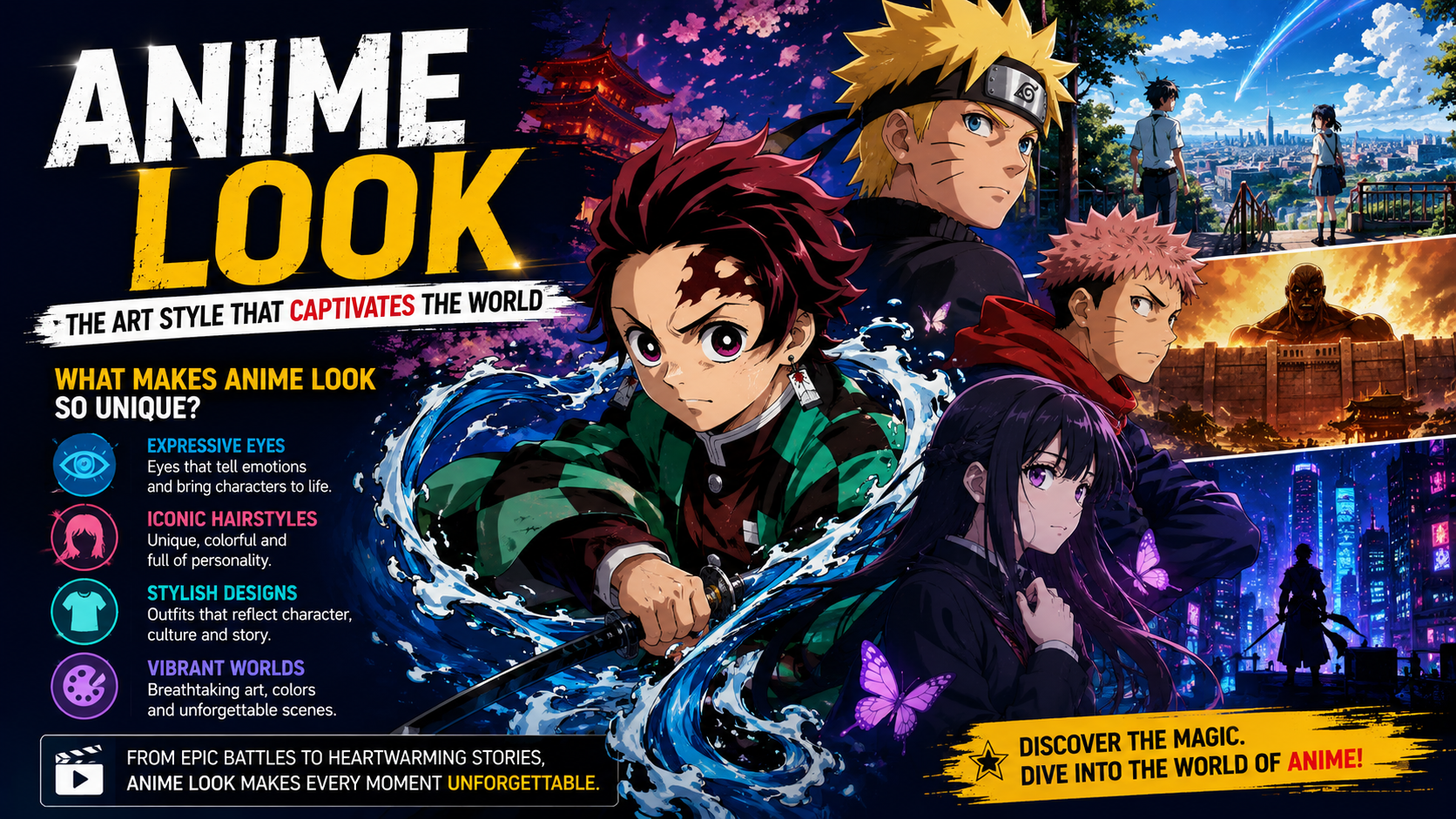
Anime is more than just a form of entertainment—it is a global cultural phenomenon that has inspired millions of fans through unforgettable stories, memorable characters, and breathtaking visuals. One of the biggest reasons behind its popularity is the distinctive anime look. Whether it’s expressive eyes, colorful hairstyles, dramatic expressions, or beautifully designed worlds, the anime aesthetic has become instantly recognizable across the globe.
From blockbuster series like Naruto, One Piece, Attack on Titan, Demon Slayer, Jujutsu Kaisen, and Solo Leveling to heartwarming films from Studio Ghibli, the anime look has evolved into a style that influences fashion, gaming, digital art, social media, and even mainstream entertainment.
In this comprehensive guide, we’ll explore what makes the anime look so unique, how it has evolved over the years, the different styles artists use, and why anime visuals continue to inspire creators and fans around the world.
What Is an Anime Look?
The term anime look refers to the visual style commonly associated with Japanese animation and manga. While different studios and artists have their own creative approaches, most anime share certain recognizable design elements that make them stand out.
These features include:
- Expressive eyes
- Distinctive hairstyles
- Vibrant color palettes
- Stylized facial expressions
- Dynamic action poses
- Detailed costumes
- Emotionally expressive body language
The anime look isn’t limited to one genre. It appears in action, romance, fantasy, science fiction, comedy, horror, sports, and slice-of-life stories, making it one of the most versatile art styles in modern entertainment.
The Evolution of the Anime Look
Anime has come a long way since its early days. In the 1960s and 1970s, animation was simpler due to technical limitations. Over time, improvements in technology and artistic techniques allowed studios to create richer worlds and more detailed characters.
Today, modern anime combines traditional hand-drawn artistry with digital tools to produce visually stunning scenes that rival blockbuster films.
Popular studios such as MAPPA, ufotable, Wit Studio, A-1 Pictures, and CloverWorks continue to push the boundaries of animation quality.
Why the Anime Look Is So Popular
One of the reasons anime appeals to such a broad audience is its ability to visually express emotions in a way that feels both dramatic and relatable.
Unlike many Western animated shows, anime often uses exaggerated facial expressions and symbolic visuals to communicate emotions like happiness, fear, determination, or sadness.
This visual storytelling creates a stronger emotional connection between viewers and characters.
The Eyes Tell the Story
If there is one feature that defines the anime look, it is the eyes.
Anime characters often have:
- Large expressive eyes
- Bright highlights
- Detailed irises
- Emotional depth
Rather than simply representing anatomy, the eyes help communicate a character’s personality and emotional state.
A confident hero may have sharp, determined eyes, while a gentle character may have softer, rounded features.
Hairstyles That Stand Out
Anime hairstyles are another signature element.
Characters frequently sport:
- Bright colors
- Gravity-defying spikes
- Long flowing hair
- Unique accessories
- Symbolic designs
Hair color often reflects personality or helps distinguish characters within large casts.
For example:
- Blue may symbolize calmness.
- Red often represents passion.
- White can suggest mystery or wisdom.
- Black may reflect seriousness or discipline.
Fashion in Anime
The anime look extends beyond facial features.
Character clothing is carefully designed to reflect personality, occupation, or cultural background.
Common styles include:
- School uniforms
- Fantasy armor
- Ninja outfits
- Futuristic cyberpunk clothing
- Traditional Japanese attire
- Casual streetwear
Fashion has become one of anime’s biggest influences on global pop culture.
Different Types of Anime Art Styles
There isn’t just one anime look.
Different genres use different artistic approaches.
Shonen Style
Found in action anime.
Characteristics:
- Sharp features
- Muscular designs
- Dynamic action poses
- Bold expressions
Examples include Dragon Ball, Naruto, and Black Clover.
Shojo Style
Popular in romance anime.
Features include:
- Elegant character designs
- Softer color palettes
- Large sparkling eyes
- Flowing hair
Seinen Style
Designed for mature audiences.
Often uses:
- Realistic anatomy
- Darker colors
- Detailed environments
- Serious expressions
Chibi Style
A playful miniature version of characters featuring oversized heads and tiny bodies.
Used mainly for comedy.
Background Art Brings Worlds to Life
The anime look isn’t limited to characters.
Modern anime includes breathtaking environments such as:
- Ancient temples
- Futuristic cities
- Cherry blossom parks
- Mountain landscapes
- Fantasy kingdoms
- Space stations
Detailed backgrounds make fictional worlds feel alive.
Lighting and Color
Lighting plays an enormous role in anime.
Studios use color to create mood.
Warm colors often represent:
- Hope
- Friendship
- Peace
Cool colors may represent:
- Loneliness
- Mystery
- Suspense
Dynamic lighting during action scenes adds cinematic impact.
Action Animation
Some of anime’s most memorable moments come from incredible action sequences.
Popular techniques include:
- Motion blur
- Energy effects
- Slow-motion scenes
- Dynamic camera movement
- Particle effects
Studios like ufotable have become famous for combining digital technology with traditional animation techniques.
Facial Expressions
Anime characters often display exaggerated expressions that communicate emotion instantly.
Examples include:
- Wide smiles
- Shocked reactions
- Determined stares
- Tears of joy
- Embarrassed blushes
These expressions contribute to anime’s unique storytelling style.
Why Artists Love the Anime Look
Many digital artists choose anime because it offers tremendous creative freedom.
Artists enjoy experimenting with:
- Color palettes
- Character design
- Fantasy elements
- Costumes
- Weapons
- Hairstyles
The style encourages imagination while remaining highly expressive.
Anime Look in Gaming
The anime aesthetic has expanded far beyond television.
Many popular games feature anime-inspired visuals, including:
- Genshin Impact
- Honkai: Star Rail
- Zenless Zone Zero
- Persona
- Tales series
- Blue Archive
These games combine engaging gameplay with visually striking character designs.
Anime Look in Cosplay
Cosplay has become one of the biggest celebrations of anime culture.
Fans recreate their favorite characters using:
- Handmade costumes
- Professional wigs
- Makeup
- Props
- Photography
Events such as Anime Expo, Comic-Con, and Japan Expo attract thousands of participants every year.
Anime Look on Social Media
Platforms like Instagram, Pinterest, TikTok, and X are filled with anime-inspired content.
Popular posts include:
- Fan art
- Wallpapers
- Character edits
- Digital paintings
- Speed art videos
- Cosplay photography
The anime look continues to inspire creators worldwide.
AI and Anime Art
Artificial intelligence has introduced new ways to create anime-inspired artwork.
Many artists use AI as a creative tool while continuing to add their own personal style and originality.
At the same time, discussions around copyright, ethics, and artistic ownership remain important within the creative community.
How Beginners Can Learn the Anime Style
If you’re interested in drawing anime, consider practicing:
- Basic face proportions
- Eye shapes
- Hair design
- Expressions
- Hand gestures
- Body anatomy
- Clothing folds
Regular observation and practice are essential for improving your skills.
Tips for Creating an Authentic Anime Look
- Study official artwork from your favorite series.
- Learn color theory.
- Practice different facial expressions.
- Experiment with lighting.
- Develop your own character designs.
- Focus on storytelling, not just appearance.
An authentic anime look comes from combining strong design with emotion.
Why the Anime Look Continues to Evolve
Anime is constantly changing.
Modern productions embrace:
- Advanced digital animation
- Cinematic camera work
- Richer color grading
- Improved visual effects
- Global artistic influences
Despite these innovations, the emotional heart of anime remains unchanged.
The Global Impact of Anime
The anime look has influenced:
- Fashion
- Music videos
- Advertising
- Gaming
- Film
- Graphic design
- Merchandise
Today, anime is one of Japan’s most successful cultural exports, enjoyed by audiences of all ages around the world.
Final Thoughts
The anime look is far more than a collection of artistic techniques—it is a visual language that brings unforgettable stories and characters to life. Its expressive eyes, distinctive hairstyles, vibrant colors, and emotional storytelling have inspired generations of fans, artists, and creators worldwide.
Whether you’re discovering anime for the first time or have followed the medium for years, understanding the elements that define the anime look helps deepen your appreciation for the incredible craftsmanship behind every frame. As technology advances and new creators bring fresh ideas to the industry, the anime aesthetic will continue to evolve while remaining one of the most recognizable and beloved visual styles in entertainment.
If you love anime, character design, digital art, and Japanese pop culture, the anime look is a celebration of imagination, creativity, and storytelling that continues to captivate audiences across the globe.
Stay connected with FilmyGags for the latest anime news, reviews, streaming guides, manga updates, character spotlights, and everything happening in the exciting world of anime.
Frequently Asked Questions (FAQs)
What is an anime look?
An anime look refers to the distinctive visual style used in Japanese animation and manga, characterized by expressive eyes, unique hairstyles, vibrant colors, and stylized character designs.
Why do anime characters have large eyes?
Large eyes help artists express emotions more clearly and make characters more visually engaging.
Which anime has the best art style?
Popular choices include Demon Slayer, Violet Evergarden, Attack on Titan, Your Name, Jujutsu Kaisen, and Solo Leveling, each known for exceptional animation and artistic quality.
Can beginners learn to draw in the anime style?
Yes. With consistent practice in facial proportions, anatomy, expressions, and color theory, beginners can gradually develop their own anime-inspired artwork.
Why is the anime look so popular?
Its emotional storytelling, memorable character designs, creative worlds, and artistic flexibility make it appealing to audiences and creators around the world.
This website is proudly managed and maintained by Shunya Digit.