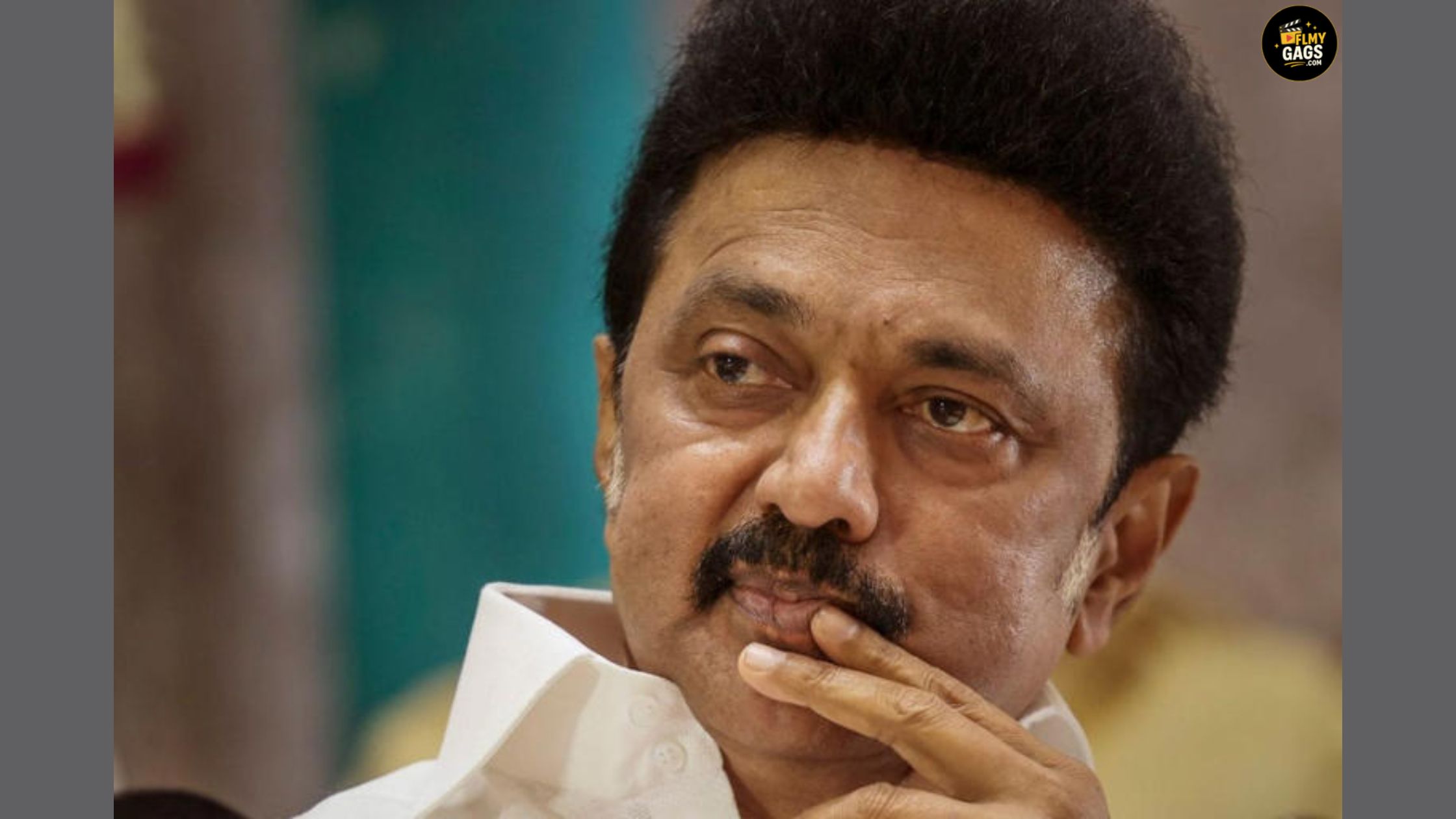
In a move that surprised political observers across India, outgoing Chief Minister M K Stalin signaled that the DMK would not aggressively challenge Vijay’s Tamilaga Vettri Kazhagam (TVK) as it attempts to form the next government.
Speaking to The Times of India, Stalin stated that he would “watch without disturbing for six months,” effectively ending speculation about a possible DMK-AIADMK alliance aimed at blocking Vijay from power.
This statement may appear simple on the surface.
But politically, it is loaded with strategy, calculation, and long-term implications.
At a time when Tamil Nadu faces a fractured mandate, Stalin’s restrained approach could redefine:
- Coalition politics
- Opposition strategy
- Welfare politics
- Governance expectations
- Vijay’s political future
More importantly, it reveals how Tamil Nadu’s political culture is evolving beyond traditional confrontation.
This blog explores why Stalin’s statement matters, the political calculations behind DMK’s approach, the challenges facing Vijay’s government, and what this means for the future of Tamil Nadu politics.
Why Stalin’s Statement Is Politically Significant
In most fractured mandates, opposition parties immediately attempt to:
- Destabilize rivals
- Build counter-alliances
- Trigger defections
- Force fresh elections
But Stalin’s approach is dramatically different.
Instead of confrontation, he has chosen strategic patience.
What Stalin Actually Signaled
His remarks indicate three major political messages:
1. DMK Will Not Join Hands With AIADMK
This effectively kills rumors of an anti-TVK coalition.
2. DMK Wants Stability
The party does not want Tamil Nadu pushed into another election or constitutional crisis.
3. Vijay Will Be Tested Through Governance
Rather than attacking from outside, DMK appears willing to let TVK face the pressures of administration.
This is not political surrender.
It is calculated positioning.
The Hidden Strategy Behind DMK’s Decision
At first glance, Stalin’s remarks seem unusually generous toward a political rival.
But seasoned political observers recognize the deeper strategy.
Why DMK May Prefer Vijay to Govern
Governance Is Harder Than Campaigning
Winning elections through charisma is one thing.
Running Tamil Nadu — one of India’s most economically important states — is another challenge entirely.
By allowing Vijay to form the government, DMK may believe:
- TVK will face administrative pressure
- Coalition contradictions will emerge
- Public expectations will become difficult to satisfy
If governance weakens, DMK can return stronger in the next election.
Pro Tip
In politics, opposition parties sometimes gain more by letting rivals govern unsuccessfully than by aggressively blocking them from power.
Why Stalin Focused on Welfare Schemes
One of the most important parts of Stalin’s interview was his emphasis on continuing flagship welfare programs.
He specifically mentioned:
- Free breakfast scheme for schoolchildren
- Kalaignar Magalir Urimai Thogai
- Welfare continuity
This was not accidental.
Welfare Politics Is Tamil Nadu’s Core Political Battlefield
Tamil Nadu has one of India’s strongest welfare-oriented political cultures.
Successive governments have competed through:
- Social schemes
- Subsidies
- Education support
- Women-centric programs
- Food security initiatives
By publicly emphasizing these schemes, Stalin is doing two things simultaneously:
1. Protecting DMK’s Legacy
He wants voters to remember these programs as DMK achievements.
2. Increasing Pressure on TVK
If Vijay reduces or alters these schemes, it could create public backlash.
The Rs 2,500 Promise: A Financial Reality Check
One of Stalin’s sharpest comments targeted TVK’s promise of giving Rs 2,500 monthly assistance to women.
He remarked:
“Give them at least Rs 1,000 as we did.”
This statement subtly questions the financial sustainability of TVK’s promises.
Why Welfare Economics Matters
Populist promises are politically attractive.
But implementing them requires:
- Massive budget allocation
- Revenue stability
- Fiscal discipline
- Administrative efficiency
Key Challenge for TVK
If the new government attempts to rapidly expand welfare spending without adequate revenue planning, Tamil Nadu could face:
- Fiscal stress
- Rising debt burden
- Reduced development spending
- Delayed infrastructure investment
Did You Know?
Tamil Nadu already spends a significant portion of its budget on welfare programs, making financial balancing one of the toughest challenges for any government.
Stalin’s “90% Manifesto Fulfillment” Claim: Political Messaging at Work
Stalin also claimed that DMK fulfilled 90% of its 2021 manifesto promises.
This statement serves multiple strategic purposes.
Why This Claim Matters
Reinforcing Governance Credibility
DMK wants to position itself as a delivery-oriented party.
Creating Comparison Pressure
TVK will now be judged against measurable governance outcomes.
Building Future Electoral Narrative
Even while moving into opposition, DMK is shaping future campaign messaging.
The NEET Reference: Shifting Blame to the Centre
Stalin also mentioned that certain promises — like abolishing NEET — could not be fulfilled because the authority rests with the central government.
This reflects a long-standing political narrative in Tamil Nadu:
- State rights vs central control
- Federalism debates
- Regional autonomy politics
Why This Matters Politically
The NEET issue remains emotionally powerful in Tamil Nadu.
By highlighting central constraints, DMK attempts to:
- Protect its credibility
- Retain anti-centre sentiment
- Keep ideological support intact
Vijay’s Biggest Challenge Starts Now
The election campaign is over.
The real examination begins now.
TVK’s Immediate Governance Challenges
Coalition Management
If TVK depends on outside support, every legislative decision becomes politically sensitive.
Welfare Expectations
Voters will expect rapid implementation of campaign promises.
Economic Balance
The government must balance welfare expansion with fiscal responsibility.
Bureaucratic Coordination
New political parties often struggle with administrative systems initially.
Public Perception
The honeymoon period may last only a few months.
Why Tamil Nadu Is Different From Other States
Tamil Nadu’s political ecosystem is uniquely sophisticated.
Voters expect:
- Strong governance
- Efficient welfare delivery
- Infrastructure growth
- Economic progress
- Administrative competence
This creates enormous pressure on any new government.
Common Myths About Tamil Nadu Politics
Myth 1: Celebrity Popularity Guarantees Long-Term Success
Popularity helps win elections, but governance determines political longevity.
Myth 2: Welfare Politics Is Financially Irresponsible
Not always.
Many Tamil Nadu welfare schemes have significantly improved:
- Education access
- Nutrition
- Women’s empowerment
- Social mobility
Myth 3: Coalition Governments Cannot Survive
Coalitions can succeed if:
- Leadership remains disciplined
- Policy priorities are aligned
- Political communication stays strong
Myth 4: Opposition Means Constant Aggression
Strategic restraint can sometimes be politically smarter than confrontation.
The Bigger Shift: Tamil Nadu Politics Is Changing
This election may mark the beginning of a major structural transformation.
For decades, Tamil Nadu politics was dominated by:
- DMK
- AIADMK
Now, the rise of TVK suggests:
- Voters are more fluid
- Personality-driven politics is growing
- Traditional loyalties are weakening
What Businesses and Investors Are Watching
Political transitions directly affect investor sentiment.
Tamil Nadu is:
- A manufacturing hub
- An automobile powerhouse
- A major IT destination
- A key electronics exporter
Investors Are Closely Monitoring
| Factor | Why It Matters |
|---|---|
| Government stability | Essential for policy continuity |
| Welfare spending | Impacts fiscal health |
| Cabinet formation | Indicates governance capability |
| Industrial policy | Affects long-term investment |
| Alliance tensions | Influences administrative speed |
Why Stalin’s Tone Was Surprisingly Moderate
Stalin could have adopted an aggressive opposition stance.
Instead, he chose restraint.
Possible Reasons
Public Mood Favors Stability
Voters may punish excessive political opportunism.
DMK Wants Moral High Ground
Allowing TVK space to govern creates a mature political image.
Time May Favor DMK
If TVK struggles administratively, DMK could regain momentum naturally.
Case Study: What Happens When New Parties Enter Governance
Across India, several new political movements have faced similar transitions.
Lessons From Other States
| Party | Initial Strength | Governance Challenge |
|—|—|
| AAP in Delhi | Anti-establishment wave | Administrative adaptation |
| Janata alliances | Coalition arithmetic | Internal instability |
| Maharashtra coalitions | Strategic alliances | Ideological contradictions |
The pattern is consistent:
Governing complexity often tests political movements more than elections do.
The Six-Month Window Could Decide Everything
Stalin’s “six months” comment is especially important.
Why?
Because the first six months often determine:
- Public confidence
- Administrative momentum
- Coalition cohesion
- Media narrative
- Investor sentiment
What TVK Must Do Immediately
1. Deliver Early Wins
Visible action matters more than long speeches.
Possible Quick Wins
- Welfare implementation
- Infrastructure announcements
- Transparency measures
- Anti-corruption actions
2. Build Administrative Trust
TVK must demonstrate competence beyond campaign rhetoric.
3. Avoid Internal Power Struggles
New political parties often face factional tensions after elections.
4. Manage Fiscal Expectations
Balancing welfare and economic discipline will be critical.
Did You Know?
Tamil Nadu is among India’s top contributors to:
- Manufacturing output
- Automobile exports
- Electronics production
- State GDP growth
This makes political stability especially important.
Could DMK Actually Benefit From Opposition?
Ironically, yes.
Opposition allows DMK to:
- Avoid anti-incumbency pressure
- Critique governance failures
- Preserve organizational strength
- Rebuild voter coalitions
In many democracies, temporary opposition periods have helped parties reinvent themselves.
The Future of Tamil Nadu Politics
Tamil Nadu is now entering an era where:
- Coalition politics may increase
- Third forces become viable
- Welfare politics intensifies
- Governance scrutiny deepens
This could create a more competitive political ecosystem.
But it also raises risks of instability if alliances remain fragile.
Conclusion
M K Stalin’s decision to let Vijay attempt government formation without aggressive interference is one of the most strategically significant developments in recent Tamil Nadu politics.
On the surface, it appears conciliatory.
In reality, it reflects:
- Political confidence
- Strategic patience
- Long-term electoral calculation
By emphasizing welfare continuity and governance accountability, Stalin has effectively shifted the spotlight onto TVK’s ability to deliver.
For Vijay, this is the transition from political phenomenon to governance test.
For DMK, this may be the beginning of a carefully planned political reset.
And for Tamil Nadu, the coming months could reshape the state’s political future for years to come.